Something Old, Something True: Native Couples Are Bringing Traditional Music Back to the Wedding Circle
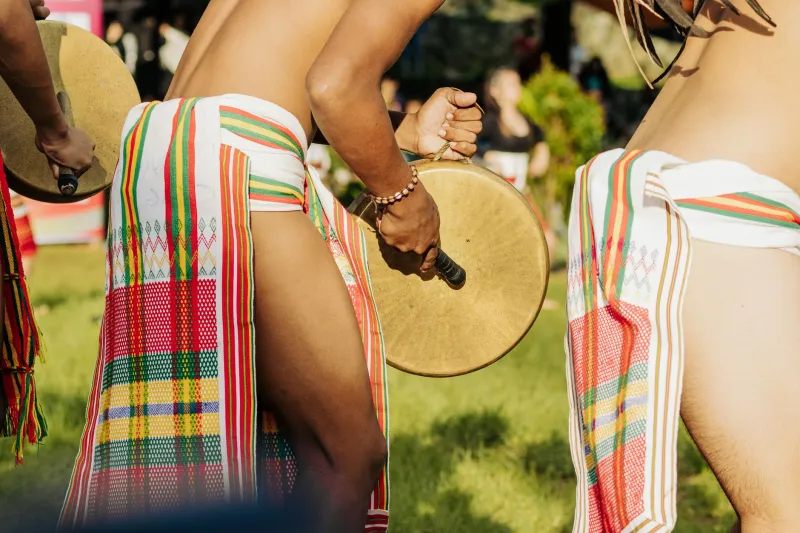
There's a moment at a lot of Indigenous weddings these days that catches guests off guard — not because something went wrong, but because something finally went right. The sound of a hand drum filling a ceremony space, a singer lifting a song in Lakota or Diné or Ojibwe, and a couple standing in the center of it all, visibly grounded in a way that a string quartet or a Spotify playlist was never going to deliver.
It's happening more and more across tribal nations, and the musicians behind it are doing some of the most quietly meaningful work in Indigenous music right now.
The Playlist That Never Fit
For a lot of Native couples, the standard wedding music conversation has always felt a little off. The classics — the processional, the first dance, the father-daughter song — were built for a cultural context that wasn't theirs. Some couples leaned into it anyway, making it work. Others quietly felt the gap between what the day was supposed to mean and what it actually sounded like.
Tahlia Runningwater, a Muscogee (Creek) woman who got married outside Tulsa two years ago, put it plainly: "We spent months planning this ceremony that was supposed to be the most us day of our lives, and then we almost walked down the aisle to a song from a movie. It just didn't sit right."
She and her husband eventually connected with a local drum group through their tribal community. The result was a ceremony that opened with a traditional welcome song, featured a hand drum blessing during the exchange of vows, and closed with a round dance that pulled every single guest onto the floor. "People cried," she said. "Not sad crying. Like, recognition crying. Like something clicked."
Musicians Stepping Into a New Role
The artists being called into these spaces are thinking carefully about what they're being asked to do. For many Indigenous musicians, wedding work sits at an interesting intersection — it's a commission, yes, but it's also participation in something sacred, and the line between celebratory and ceremonial isn't always obvious.
Marcus Swiftwind, a Northern Cheyenne singer and hand drummer based in Montana, has been performing at Native weddings and naming ceremonies for the past several years. He's thoughtful about how he talks about it. "There are songs I'll bring to a wedding and songs I won't. Some things belong to specific ceremonies, specific contexts, and it's not my place to pull them out just because someone's having a beautiful day. But there's so much in our tradition that is genuinely celebratory — songs for new beginnings, songs for family, songs that say 'we see you and we're with you.' That's what I'm there to offer."
That discernment is something couples increasingly appreciate. The trend isn't about performing Indigeneity for guests or turning a ceremony into a cultural showcase. It's about couples finding musicians who understand the difference between honoring tradition and putting it on display.
Language as Living Sound
One of the most striking elements of this revival is the role of Indigenous languages. For couples with ties to nations actively working to revitalize their languages, having a song sung in their ancestral tongue during their wedding isn't just moving — it's political. It's an act of continuity that puts their union inside a longer story.
Delilah Swiftbird, a Cherokee language learner from eastern Oklahoma, worked with a Cherokee-language singer to incorporate a short traditional song into her ceremony last spring. "My grandmother spoke Cherokee. I'm still learning. And having that language spoken — sung — at my wedding felt like I was making a promise not just to my partner but to everyone who came before us and everyone who might come after."
The musicians who carry these languages into wedding spaces often describe the weight of that responsibility with real humility. It's one thing to perform at a concert. It's another to be the living link between a couple and a tradition that wasn't always allowed to survive.
Building Something Custom
Not every Native couple has deep ties to a specific tribal musical tradition, and the musicians working in this space have gotten creative about meeting people where they are. Some couples come from different nations and want music that acknowledges both heritages. Others are urban Natives who grew up disconnected from their tribal communities and are using their wedding as a moment of reconnection.
Robin Eagleheart, a Diné-Paiute musician who works out of the Phoenix area, has developed a consultation process for couples that starts with a real conversation about their relationship to their heritage — what they know, what they're learning, what feels authentic versus performative. "I'm not there to educate them about their own culture. I'm there to help them figure out what music genuinely belongs to their story. Sometimes that's a traditional song. Sometimes it's a new composition that draws on those roots. Sometimes it's both."
That custom approach is part of what's making Indigenous wedding music feel different from the broader trend of "cultural weddings" that can sometimes tip into aesthetic territory. This isn't about decorating a ceremony with Nativeness. It's about couples and musicians building something together that actually means something.
What It Means for the Music
There's a broader cultural current running through all of this. As more Native couples invest in traditional music for their ceremonies, they're also investing in the musicians who carry those traditions, helping sustain the livelihoods of artists whose work doesn't always translate easily into streaming numbers or festival bookings.
And the ripple effects go further. Kids who attend these weddings grow up having heard those songs in a joyful, loving context. Elders who thought certain songs might be fading get to hear them sung at a celebration. Cousins and friends who didn't know that music existed start asking questions.
Marcus Swiftwind sees it clearly: "Every wedding I play, I'm not just there for the couple. I'm planting something. A song at a wedding stays with people. They hum it later. They ask about it. That's how music survives — not in archives, but in moments people actually lived."
The wedding drum isn't just background music. It's a declaration. And more Native couples are ready to make it.