Bedtime Is the Battlefield: Indigenous Women Are Saving Languages One Lullaby at a Time
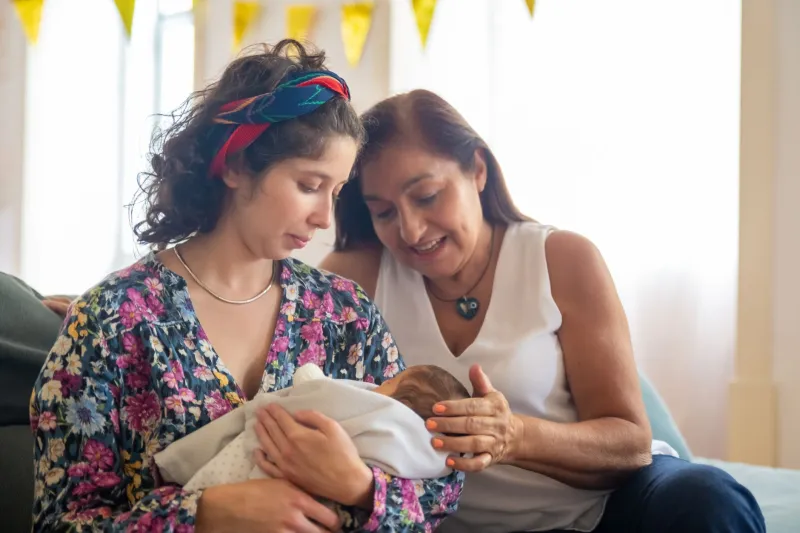
There's a moment — right after the light goes out, right before sleep pulls a child under — when a mother's voice becomes the whole world. For generations of Native women across the United States, that moment has been one of the most stubbornly protected spaces in Indigenous culture. Not a stage. Not a studio. A crib-side whisper in a language the rest of the country spent centuries trying to extinguish.
And right now, that whisper is getting louder.
The Song Before the Word
Linguists have long argued that language acquisition in children begins earlier than most parents realize — that infants are absorbing phonetic patterns, tonal rhythms, and emotional resonance from the sounds around them long before they can produce a single syllable. For Indigenous communities watching their languages slip toward critical endangerment, that window of early absorption isn't just developmentally interesting. It's urgent.
Rosalie Morningstar, a Lakota mother of three from the Standing Rock region of North Dakota, started recording herself singing traditional Lakota lullabies in 2019, initially just for her own kids. She posted a few clips to a private Facebook group for Native mothers. Within weeks, women from six different tribal nations had reached out asking for the recordings.
"I wasn't thinking about preservation," she says. "I was thinking about my daughter falling asleep. But then I realized — if I don't know these songs, she'll never know them. And if she doesn't know them, who does it fall to next?"
That question, replicated in households from the Pacific Northwest to the Sonoran Desert, is driving a quiet but coordinated movement of Indigenous women who are treating the lullaby as a front line.
More Than Melody — It's Memory
Traditional children's songs in Native communities carry a kind of cultural density that's easy to underestimate. They aren't just soothing sounds. They embed kinship terms, relationship structures, place names, seasonal knowledge, and spiritual concepts into forms small enough for a child's mind to hold. A Diné (Navajo) lullaby doesn't just calm a baby — it can teach the child which direction the mountains lie, what clan they belong to, how their grandmother's grandmother understood the world.
Marjorie Runningwater, an Ojibwe educator and singer based in Minnesota, has spent the last decade documenting children's songs from elders in her community before those elders are gone. She describes the work as "emergency archiving with a heartbeat."
"These aren't museum pieces," she says firmly. "When I sit down with an elder who's 87 years old and she sings me something her mother sang to her, I'm not collecting an artifact. I'm catching something that was mid-fall."
Runningwater has since partnered with a tribal college in her region to develop a curriculum that teaches young mothers — many of whom grew up speaking little or no Ojibwe — how to sing these songs phonetically, with enough context to pass the meaning along even when fluency isn't yet possible. She calls it "planting the seed before the soil is ready."
Recording the Rocking Chair
Technology is playing a bigger role than you might expect. A number of Indigenous women have started using home recording setups — some as simple as a decent phone mic and a free DAW — to capture lullaby recordings with enough audio quality to share meaningfully. The results are being uploaded to private tribal archives, distributed through Indigenous parenting networks, and in some cases released as informal audio collections.
Celia Swiftwind, a Cheyenne River Sioux artist and new mother in her late twenties, released a small collection of recorded lullabies last year under the title Čhaŋtéčhihila — a Lakota phrase that roughly translates to "beloved." She recorded it at home, mostly at night when her son was actually sleeping nearby. The production is spare and intentional: her voice, a hand drum in the distance, silence where silence belongs.
"I didn't want it to sound polished," she explains. "I wanted it to sound like a house at night. Because that's where these songs live."
The collection has been downloaded thousands of times by Native families across the country, shared in parenting groups, and used by at least two tribal language programs as supplementary material for young learners.
When Grandmothers Become the Archive
In many communities, the most critical link in this chain isn't the mother — it's the grandmother. And with every elder who passes without being recorded, entire phonological worlds go quiet.
Eleanor Eagleheart, a 74-year-old Muscogee (Creek) Nation elder from Oklahoma, has been working with her granddaughter Tara — a music education student — to record every children's song she can still remember. They sit together on Eleanor's porch and work through the songs slowly, Eleanor singing, Tara transcribing and recording. Some sessions end early because the memory of where a song came from is too heavy to hold for long.
"Some of these songs I haven't sung since my own mother sang them to me," Eleanor says. "You think you've forgotten. Then you start and your body remembers before your mind does."
Tara has been open about the emotional weight of the project on social media, where she's built a small but devoted following of other young Native women doing similar work with their own elders. The response, she says, has been overwhelming.
"So many of us are in the same position — we have this small window of time and we know it. You can feel the urgency. But you also feel this incredible love in the room when you're recording."
The Radical Intimacy of the Quiet Song
It's worth saying plainly: what these women are doing is radical. Not in the way that word usually gets applied to music — not loud, not confrontational, not designed for an audience. Radical in the older sense. Going to the root.
The boarding school era specifically targeted the intimate transmission of Indigenous culture — the home, the family, the mother tongue — because the architects of assimilation understood that language doesn't just live in ceremonies and classrooms. It lives in the sounds a child falls asleep to. Disrupting that transmission was the point.
Which means restoring it is the counter-move. Every lullaby sung in Lakota, Ojibwe, Muscogee, Diné, Cheyenne, or any of the hundreds of other Native languages still alive in this country is a direct refusal of that project. Not a performance of resistance — an actual act of it, happening in the most private possible space.
Rosalie Morningstar puts it simply: "The most powerful thing I can do for my nation right now is put my daughter to sleep in Lakota. That's it. That's the whole thing."
Keep Listening
At Native Cat Recordings, we believe the most important music doesn't always come with a streaming link or a stage. Sometimes it comes through a baby monitor at 2 a.m. If you're a Native caregiver doing this work — recording, teaching, singing — we want to hear from you. These stories deserve to be told, and these songs deserve to be heard.
The revolution is quiet. That doesn't mean it's small.