Before the First Drum Hits: Indigenous DJs Are Owning the Powwow Warmup
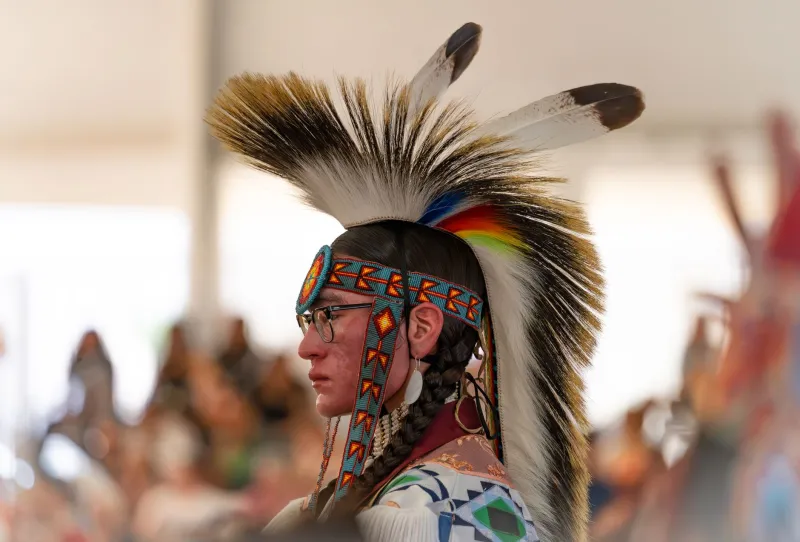
Walk into any major intertribal powwow in the country about ninety minutes before grand entry, and you'll notice something that didn't exist at these gatherings a generation ago. Before the emcee grabs the mic, before the host drum tunes up, before a single jingle dress starts shaking — there's a DJ behind a table, headphones half-cocked, reading the room like it's the most important set of their life. Because honestly? It might be.
The pre-ceremony hour at powwows has quietly become one of the most contested and creative spaces in Native music culture. And the Indigenous DJs claiming that space aren't just filling time. They're doing something much more deliberate.
The Unspoken Audition
Ask any Native DJ who's worked a powwow setup and they'll tell you the same thing: you feel the weight of it immediately. This isn't a club. This isn't a festival main stage where you can drop whatever's trending and call it a night. The audience in those folding chairs and on those bleachers ranges from eight-year-olds in full regalia to elders who've been attending powwows for six decades. You've got urban Natives who found their way back to ceremony through social media, and you've got community members who never left.
DJ Reza Thunderbird, a Lakota-Diné producer based out of Rapid City who's been spinning pre-ceremony sets at powwows across the Plains for the past five years, describes it as "the most honest feedback loop in music."
"You play something that doesn't fit and you know it instantly," he says. "Not because anyone boos you. Nobody boos at a powwow. You just feel the energy drop. An elder shifts in their seat. A kid stops looking up. That's your signal."
The flip side, though, is when you get it right. When a well-timed remix of a Native artist slides in just as families are finding their seats, and you watch a teenager in street clothes and a teenager in full traditional dress both nod at the same beat — that's the whole job, right there.
What Actually Goes Into These Playlists
The construction of a pre-ceremony powwow set is genuinely more complex than most people outside the culture would ever guess. There's no official rulebook, which means each DJ is essentially writing their own philosophy in real time.
Most of the artists doing this work describe a layered approach. The earliest part of the set — when the arena is still sparse and people are trickling in — tends to lean toward ambient or instrumental Indigenous music. Think throat singing from Inuit artists, flute compositions from Native composers, or the kind of gentle drum-forward tracks that feel like a natural continuation of the land itself. It's a sonic invitation more than a performance.
As the crowd fills in, the energy shifts. This is where contemporary Native artists start to take center stage. NDN Girls. Snotty Nose Rez Kids. Supaman. Frank Waln. Shawnee Cold. The playlist starts to pulse. The DJ is no longer just setting atmosphere — they're making a curatorial argument about who belongs in this space and what Native music actually sounds like in 2024.
And then, maybe twenty minutes out from grand entry, the sets start pulling back. The tempo drops. The bass softens. It's a deliberate deceleration, a signal to the body that something ceremonial is approaching. That transition — from contemporary banger to sacred threshold — is where the real artistry lives.
Elders and the Algorithm
One of the most interesting tensions these DJs navigate is the generational divide in musical taste. It's not a hostile divide — powwow culture has always been intergenerational by design — but it's real, and it requires genuine sensitivity.
DJ Mahina Swiftwind, an Ojibwe-Kanaka Maoli artist from Minneapolis who started spinning powwow sets after years in the club circuit, talks about the moment she realized her approach needed to evolve.
"I played a remix of a traditional song early in my second season and got pulled aside by one of the elder women afterward," she recalls. "She wasn't angry. She just said, 'That song belongs to a specific ceremony. People here know that.' I hadn't known. That conversation changed everything about how I research before a set."
Now Mahina keeps what she calls a "clearance list" — a running document of songs she's confirmed with knowledge keepers as appropriate for public, non-ceremonial contexts. It takes time. It takes relationships. But it's become the foundation of her practice.
That kind of accountability is something the broader music industry rarely demands of its artists. Indigenous DJs working in ceremony-adjacent spaces are essentially building an ethical framework that the rest of the culture hasn't caught up to yet.
The Bridge Nobody Talks About
Here's the thing that gets lost in conversations about powwow attendance trends and cultural continuity: the pre-ceremony playlist is often the first Native music a young person hears in a context that feels cool to them.
For a lot of Native youth — especially those growing up in urban areas, or in communities where cultural connection has been fractured by history — the powwow can feel intimidating. The regalia, the protocol, the unfamiliar dances. It's beautiful, but it can also feel like walking into a world you're not sure you belong to.
But then a DJ drops a Snotty Nose Rez Kids track and the arena suddenly sounds like something familiar. It sounds like now. And the kid who wasn't sure they had a place here starts to think maybe they do.
That's not a small thing. That's the whole point.
DJ Reza puts it plainly: "My job in that hour before grand entry is to make sure every Native person who walks through that entrance feels like this place was made for them. Old style, new style, doesn't matter. You belong here. The music says so."
What the Scene Needs Next
For all the creative energy these artists bring, Indigenous powwow DJs are still largely working without institutional support. There's no formal training pipeline, no professional network, and compensation — when it exists at all — is often minimal. Many of these artists are absorbing the costs of their own equipment, research, and travel out of love for the culture.
What would help? More intentional mentorship from experienced community members who can share knowledge about which songs carry ceremonial weight. More investment from tribal nations and powwow committees who want to formalize this role rather than treat it as an afterthought. And frankly, more recognition from the broader Indigenous music world that this work is artistry, not just logistics.
The drums will always be the heartbeat of the powwow. Nobody's arguing otherwise. But before the heartbeat, there's a breath — and right now, a new generation of Native DJs is learning to control it with remarkable care.
That's worth paying attention to.