Concert Grounds as Common Ground: How Tribal Music Festivals Became the Loudest Voice in Indian Country Politics
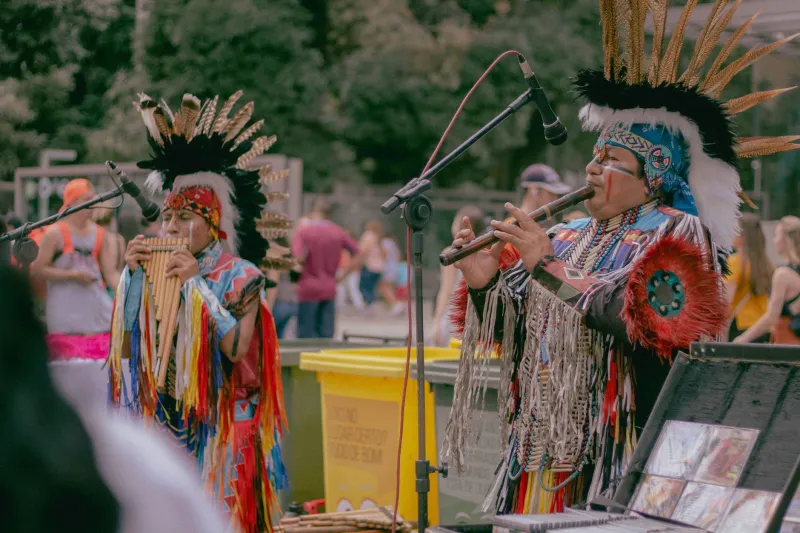
There's a moment at a lot of these festivals — right between a round dance and a headlining set — where you feel it. Something heavier than music. Something that has nothing to do with the sound system and everything to do with the ground you're standing on. Tribal nations across the US have figured out what that feeling is worth, and they're building entire events around it.
Native-organized music festivals have been growing in size, ambition, and political intentionality for the better part of a decade. But what's happening right now feels different. Tribal councils, event organizers, and artists aren't just filling stages — they're engineering cultural moments with a clear-eyed political purpose. The festival grounds themselves have become some of the most charged, deliberate spaces in Indian Country.
More Than a Lineup
When the Oneida Nation of Wisconsin launched its annual outdoor music gathering a few years back, the programming committee made a decision that set the tone for everything that followed: every artist on the bill had to be Indigenous, and every performance had to include at least a brief acknowledgment of the land, the treaties, and the nation hosting the event. It wasn't a suggestion. It was part of the contract.
That kind of structural intentionality is becoming more common. Festival organizers are treating the event schedule the way activists treat a rally program — every element placed with purpose. Panel discussions on water rights get booked between musical acts. Tribal elders share stage time with up-and-coming Native hip-hop artists. Booths from Indigenous legal advocacy groups sit right next to the food vendors.
The result is an environment where political education and cultural celebration aren't competing for attention. They're the same thing.
Land as the Message
You can't talk about these festivals without talking about where they happen. Location isn't incidental — it's the whole argument.
When a tribal nation hosts a major music event on its own land, it's making a statement that doesn't require a microphone. Thousands of non-Native attendees drive onto sovereign territory, spend money in a Native-run economy, and experience — even briefly — what it looks like when Indigenous people are in charge of the space. For many visitors, it's the first time they've been on reservation land at all.
Organizers are deeply aware of this. The Coeur d'Alene Tribe in Idaho, for example, has used its outdoor event infrastructure to draw regional and national attention to its ongoing water rights disputes with neighboring municipalities. The festival becomes a reason for journalists to show up. And once journalists show up for the music, they tend to stay for the story.
Similarly, the Red Lake Band of Chippewa in Minnesota has leaned into its annual cultural gatherings as platforms for educating attendees about treaty-protected fishing and hunting rights — rights that remain under legal and political pressure. When you're dancing on the shore of Red Lake with a band playing in the background and an elder explaining what that water means to the nation, the abstraction of treaty law becomes very real very fast.
Economic Sovereignty Isn't a Side Effect — It's the Point
Let's talk money, because the political story and the economic story are inseparable here.
Tribal-run festivals generate significant revenue that stays within the nation. Catering contracts go to Native-owned businesses. Security is often handled by tribal law enforcement. Craft vendors are prioritized from within the community. In some cases, the festivals have become anchor events that support year-round employment and fund cultural programming that would otherwise go unfunded.
This is economic sovereignty in action — not as a talking point, but as a cash flow reality. And it matters politically because financial independence is one of the most durable forms of self-determination a nation can exercise.
For artists, these festivals also represent something that mainstream venues rarely offer: a fair deal on their own terms. Booking fees negotiated with tribal organizers who understand the cultural weight of the work. Contracts that don't require artists to surrender their image rights. Stages where no one is asking them to dial back the traditional language in their lyrics to make the crowd more comfortable.
Artists Who Show Up With an Agenda
The musicians playing these festivals aren't passive participants in the political framing. A lot of them are architects of it.
Think about what it means when someone like Supaman or Raye Zaragoza takes a festival stage on tribal land and opens with a song about missing and murdered Indigenous women, or water protectors, or the ongoing erasure of Native languages. They're not making a political detour from the music — the music is the politics. And the festival setting amplifies that in ways a streaming platform simply cannot replicate.
Live performance carries a communal weight. When thousands of people hear a song about treaty violations while standing on treaty land, something shifts. It's not just content consumption. It's a shared experience with stakes.
Organizers know this, and they book accordingly. The curation of a tribal music festival lineup is, in many cases, an act of political strategy as much as artistic taste.
Shifting the Narrative, One Festival at a Time
For a long time, the dominant cultural narrative around Indigenous people in the US was one of erasure — past tense, historical, tragic but distant. These festivals are a direct challenge to that framing. They are loud, present-tense assertions that Native nations are not relics. They are governing bodies with economic power, cultural vitality, and a very clear message about who owns this land and what that ownership means.
The national media is starting to catch on, slowly. Coverage of tribal music events has crept into mainstream outlets that would have ignored them five years ago. That's partly because the festivals are getting bigger and harder to overlook. But it's also because the organizers are getting better at making the story legible to outside audiences without softening the edges.
They're not watering down the politics to make the press comfortable. They're building events so compelling that the press shows up anyway.
Why This Moment Matters
We're at a point where the intersection of culture and politics in Indian Country is more visible than it's been in decades. Music is a huge part of why. Festivals organized by and for Native nations are creating physical spaces where sovereignty isn't abstract — it's the address on the venue.
For anyone paying attention to where Indigenous music is heading, these festivals are essential. Not just as entertainment, not just as cultural preservation, but as some of the most creative and consequential political organizing happening in the US right now.
The stage is set. Literally.