Scoring While Native: The Indigenous Composers Forcing Hollywood to Actually Listen
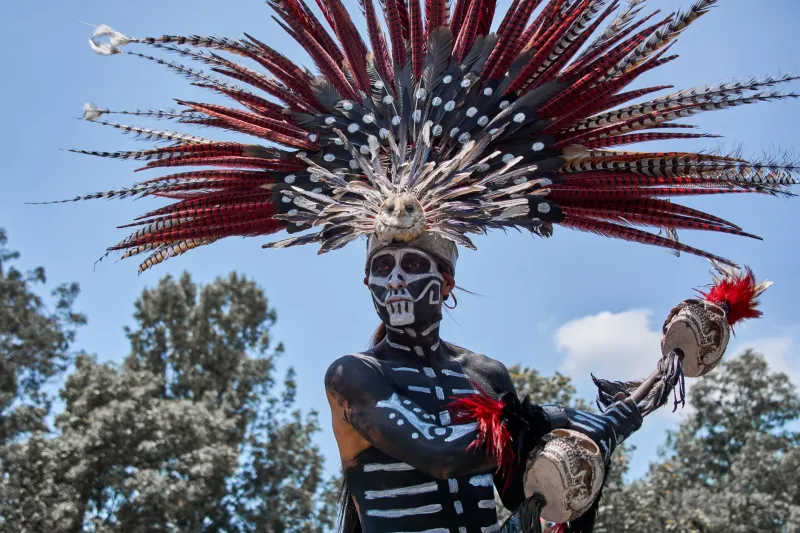
There's a particular kind of absurdity baked into Hollywood's relationship with Indigenous music. Studios have spent generations crafting sweeping cinematic narratives about Native people — their land, their grief, their survival — and then handed the score to composers who had zero connection to those communities. The result was a sonic shorthand: low drums, a vaguely "ethnic" flute, maybe a chant pulled from some dusty archive. It was, to put it plainly, made-up music for made-up versions of real people.
But something is shifting. Slowly, stubbornly, a new wave of Native and Indigenous composers and musicians is carving out space in the industry — landing placements in prestige TV, feature films, and documentary work — and they're not showing up to play the background. They're showing up to rewrite the whole score.
The Room Nobody Was Saving a Seat For
Let's be real about what Indigenous composers have historically been up against. Hollywood's music infrastructure — the agencies, the music supervisors, the composer guilds — wasn't built with Native artists in mind. Breaking in has meant navigating an industry that simultaneously wanted the aesthetic of Indigenous culture and had no interest in hiring the people who actually hold that culture.
Composers like Raven Chacon (Diné), who became the first Native American to win the Pulitzer Prize for Music in 2022, have spent years working at the intersection of contemporary composition and Indigenous sonic traditions. His work isn't background filler — it's confrontational, deeply considered, and impossible to reduce to a stereotype. But getting that kind of artistry recognized inside Hollywood's machine has required more than talent. It's required persistence in rooms that weren't designed to receive it.
The pushback takes different forms depending on who's in the chair. Sometimes it's outright skepticism — the assumption that a Native composer can't deliver the "universal" sound a production needs (translation: the sound a white audience won't have to think too hard about). Other times it's more insidious: being brought in as a consultant rather than a lead, or having your contributions diluted by a non-Native composer who gets the actual credit.
What Authenticity Actually Sounds Like
Here's the thing about "authenticity" in film scoring: the industry loves the word and hates the implications. Because if you actually commit to authentic Indigenous sound — music that comes from specific nations, specific ceremonies, specific relationships between people and place — you can't just grab it off a stock library and call it a day.
For composers working from within their own communities, that specificity is the whole point. A Lakota composer scoring a story set on the Pine Ridge Reservation isn't going to reach for a generic pan-Native soundscape. They're going to draw from a musical lineage that has its own history, its own protocols, its own emotional vocabulary. That's not a limitation. That's the depth the story deserves.
This is where the tension gets real. Productions that bring in Native composers sometimes discover that authentic representation means giving up control — accepting that certain sounds or ceremonial elements aren't available for commercial use, full stop. The composer isn't being difficult. They're protecting something that belongs to their community, not to the studio's IP catalog.
For some productions, that's a dealbreaker. For others, it becomes a creative constraint that actually pushes the work somewhere more interesting.
The Placements That Are Changing the Conversation
The last few years have seen a meaningful uptick in Indigenous composers getting real opportunities — not just tokenistic gestures, but substantive creative roles. The success of productions like Reservation Dogs (FX/Hulu) opened up a broader conversation about what it looks like when Native creatives control the full scope of a project, music included. The show's sound — which draws on everything from classic rock to Indigenous folk — exists in a completely different universe from the drum-and-flute clichés of decades past. That's not an accident. It's what happens when Native people are in the writer's room, the director's chair, and the music supervisor's seat.
Documentary filmmakers have also been more willing to bring in Indigenous composers, partly because the stakes of getting it wrong are more obvious when the subject matter is explicitly political or historical. A documentary about treaty rights or land sovereignty scored by a composer with no connection to the story is a credibility problem that's hard to paper over.
Smaller independent productions have been the most fertile ground. Without the budget expectations and risk-aversion of major studios, indie filmmakers have more freedom to hire based on fit rather than industry reputation — and that's opened doors for composers who might not have the credits yet but absolutely have the chops.
The Commercial Opportunity vs. Cultural Integrity Tightrope
Every Native artist working in mainstream entertainment walks a version of the same tightrope. Taking the placement means visibility, income, and the chance to shift what audiences hear when they think about Indigenous music. It also means operating inside an industry that has historically extracted from Native communities without giving much back.
There's no clean answer to that tension. Some composers have developed clear personal guidelines — certain sounds won't appear in commercial work, period. Others work with their communities to determine what's shareable and what isn't, treating the question of cultural integrity as a collective decision rather than an individual one. A few have used their industry access as leverage, pushing studios toward broader hiring practices or demanding that profits from Indigenous-themed projects flow back to Indigenous communities.
What's consistent across all of them is the refusal to let the industry define the terms. Getting in the room is one thing. Staying true to why you wanted to be there in the first place — that's the harder work.
What Comes Next
The infrastructure is starting to catch up, even if slowly. Organizations like the American Indian College Fund and various tribal arts programs have begun explicitly supporting pathways into film and television composition. Music schools are (gradually, imperfectly) reckoning with how their curricula have centered Western European traditions at the expense of everything else. And the audience appetite for genuinely diverse storytelling — sound included — isn't going away.
None of that erases decades of exclusion overnight. But it does mean that the next generation of Indigenous composers is entering the conversation with more support than their predecessors had. They're not just knocking on Hollywood's door anymore. Some of them are building the door from scratch.
At Native Cat Recordings, we've been watching this shift with a lot of excitement — and a healthy amount of impatience. Because the talent has always been there. The stories have always been there. What's finally, slowly changing is the industry's willingness to get out of its own way and let Native artists score them.