From the Arena to the Algorithm: How Powwow Culture Found Its Footing on TikTok
The Drum Drop Heard 'Round the Internet
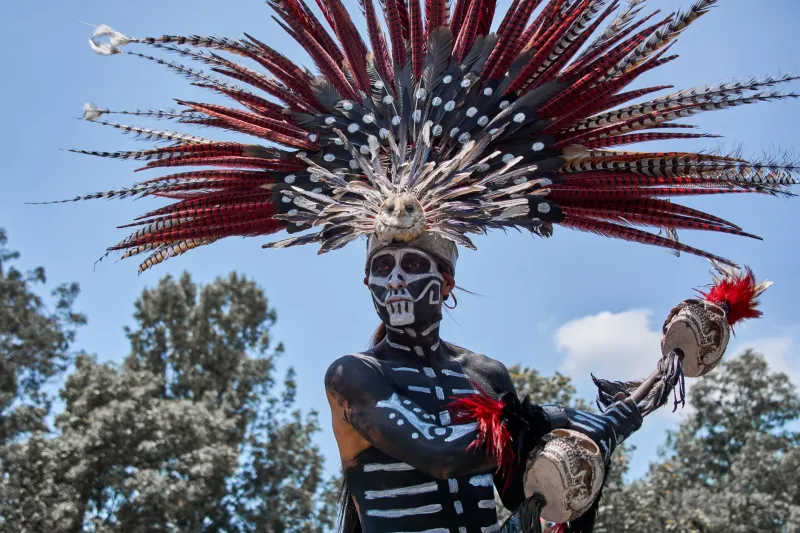
It started, like so many things do now, with a fifteen-second clip. A young Lakota fancy dancer in full regalia — feathers catching the arena lights, moccasins barely touching the ground — posted a snippet from a regional powwow in South Dakota last summer. By morning, it had two million views. By the end of the week, his follower count had jumped from a few hundred to nearly 80,000. His phone, he later said, wouldn't stop buzzing for days.
Stories like this are no longer rare. Across Indian Country, young Indigenous artists — dancers, singers, hand drum groups, grass dancers, jingle dress performers — are discovering that the powwow circuit and the TikTok algorithm have something unexpected in common: both reward authenticity, energy, and a hook that hits fast. The difference is that one has existed for generations, and the other was built in Silicon Valley with absolutely no Native community in mind.
And yet, here we are.
A Stage That Never Closes
For decades, the powwow circuit has been its own ecosystem — a traveling community of competitors, vendors, emcees, and drum groups that moves through reservation towns, fairgrounds, and urban cultural centers from spring through fall. Regional competitions can draw serious prize money and serious prestige. But outside of Native communities, most of mainstream America had no idea any of this was happening.
TikTok changed the radius of that world almost overnight.
"The powwow has always been a place where you show your best," says one Northern Cheyenne grass dancer who asked to be identified only by his dance name. "Now that 'best' can travel. Someone in New York who's never set foot on a reservation can watch and feel something real. That matters to me."
For artists who've spent years perfecting their craft in relative obscurity — at least by mainstream standards — the sudden visibility is intoxicating and complicated in equal measure. Short-form video platforms don't come with instruction manuals for cultural nuance. The same algorithm that amplifies a clip of a jingle dress dancer can also flatten the context around it, stripping ceremony from performance and turning something layered into something consumable.
What You See Isn't Always What's Being Offered
Here's where it gets nuanced, and where the generational conversation inside Native communities gets most pointed.
Not everything at a powwow is meant for outside eyes. Certain songs, certain dances, certain regalia carry spiritual weight that doesn't translate through a phone screen — and doesn't need to. Elders across multiple nations have been clear about this for a long time. The question TikTok is forcing, whether communities are ready for it or not, is: who enforces those boundaries in a space where enforcement is essentially impossible?
"My grandmother sat me down before I ever posted anything," says a young Ojibwe singer from Minnesota who has amassed a significant following for her hand drum content. "She didn't say don't share. She said know what you're sharing. There's a difference between celebrating your culture and giving pieces of it away to people who don't have the context to hold it right."
That distinction — celebrating versus surrendering — is the line that Indigenous creators are drawing for themselves, often without institutional guidance, often in real time, often with hundreds of thousands of people watching.
Some have developed their own informal codes. They'll share competition footage but not ceremonial footage. They'll explain the history of a dance style in a caption but decline to detail its spiritual origins. They'll engage with curious followers but block the ones who start treating their culture like a costume. It's exhausting, creative, and kind of remarkable all at once.
Elders at the Table (Even When the Table Is a Comments Section)
What's striking about this moment is that it isn't purely a youth story. Elders are in the conversation — sometimes in the comment sections themselves, sometimes in the living rooms and community halls where young creators are getting coached before they post.
Several Native TikTok creators have described a process that looks less like individual social media strategy and more like community consultation. They run clips by knowledge keepers. They ask drum group leaders for permission before posting audio. They credit their teachers in their bios. The platform may be new, but the protocol of asking before sharing is old.
"TikTok didn't invent the idea of consent," one Diné beadwork artist and occasional powwow emcee noted in a widely shared video earlier this year. "We've had that concept forever. The platform just made the stakes higher."
That framing — high stakes, ancient values — captures something important about why this moment feels different from previous waves of Native cultural visibility in mainstream media. Young Indigenous creators aren't passive recipients of algorithmic attention. They're active agents making deliberate choices about representation, and they're doing it with the guidance of their communities in ways that previous generations of Native artists in Hollywood or on major record labels often weren't afforded.
Viral Fame and the Commodification Trap
Of course, visibility has a shadow side, and anyone who's spent time in digital spaces knows what happens when a subculture goes mainstream fast. The commodification machine moves quickly. Within weeks of that South Dakota fancy dancer's video going viral, knock-off regalia started appearing on Etsy. A fashion brand slid into his DMs asking about a "collaboration." A podcast that had never once covered Native culture invited him to be a guest to explain "the TikTok powwow trend."
He declined all of it.
"I'm not a trend," he said in a follow-up video that got nearly as many views as the original. "I'm a person from a nation with a history. If you want to understand what you're watching, start there."
That kind of pushback — clear, confident, unapologetic — is becoming a signature move for Indigenous creators who've found their footing online. They're not just sharing culture; they're actively shaping how it's received, correcting misrepresentations in real time, and building audiences that are genuinely educated rather than just entertained.
A New Kind of Launching Pad
For Native musicians specifically, the powwow-to-TikTok pipeline is creating opportunities that the traditional music industry never offered. Drum groups are picking up streaming followers. Solo singers who compete on the circuit are landing sync licensing inquiries. A few have parlayed their online presence into festival bookings at venues that wouldn't have known where to find them two years ago.
None of that is simple, and none of it comes without cost. But there's something genuinely exciting happening at the intersection of the powwow arena and the phone screen — a generation of Indigenous artists who refuse to choose between their traditions and their ambitions, who are figuring out how to carry both at once.
The algorithm didn't build Indian Country. But Indian Country is learning to use the algorithm. And on their own terms, that's a story worth watching.