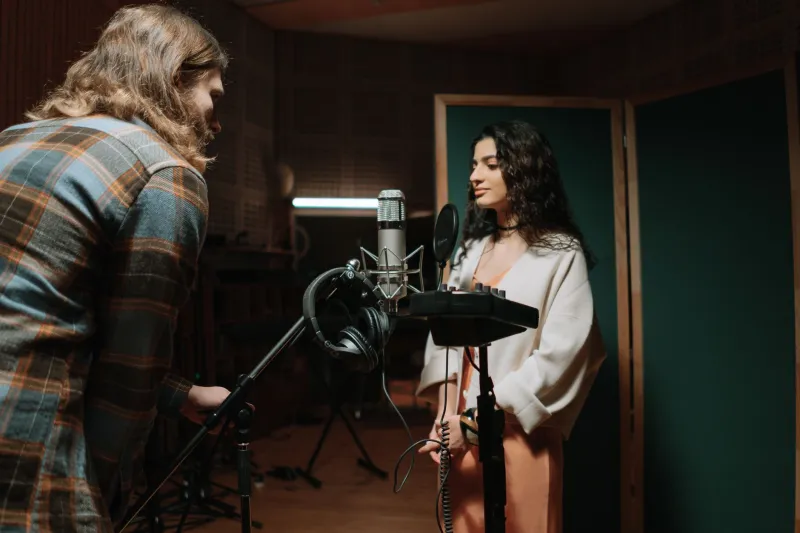
Meet the Architects: 7 Indigenous Composers and Producers Quietly Remaking American Music
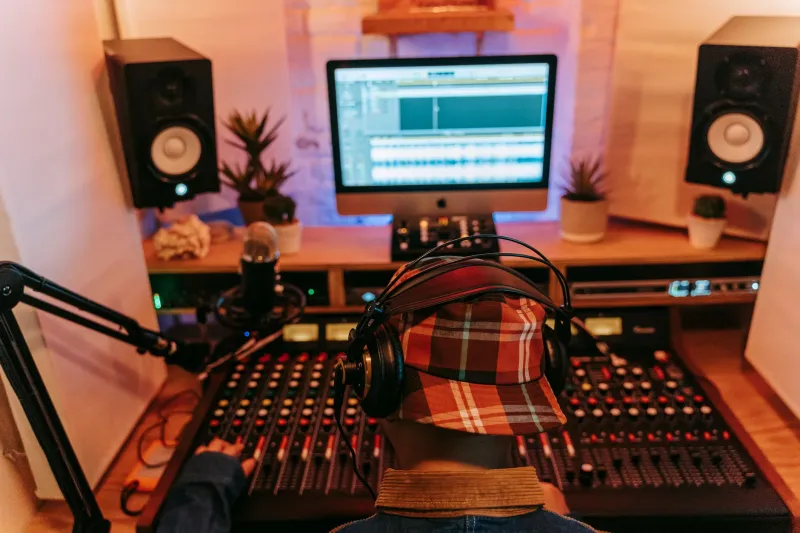
American music has always had Native roots. From the rhythmic structures that quietly influenced early jazz to the land-based poetry woven into folk and country traditions, Indigenous sound is foundational to what we call "American music" — even when that contribution goes uncredited, unacknowledged, and unpaid.
That's changing. A new generation of Native composers and producers is stepping out of the margins and into the center of contemporary American sound. They're working in hip-hop, electronic, classical, country, jazz, and experimental music — sometimes all at once — and they're doing it with a cultural depth that makes most mainstream production feel a little thin by comparison.
This list isn't exhaustive. It's a door. Walk through it.
1. Frank Waln — Sicangu Lakota | Hip-Hop / Spoken Word
If you only listen to one artist on this list, make it Frank Waln. Raised on the Rosebud Sioux Reservation in South Dakota, Waln makes hip-hop that hits like a history lesson you actually want to sit through. His production blends traditional Lakota elements with contemporary beats, and his lyrics take on everything from the trauma of reservation life to the resilience of Indigenous identity with a clarity that's genuinely rare.
 Photo: Frank Waln, via image.slidesharecdn.com
His 2014 EP Ab-Original is the place to start. The track "My Stone" in particular is a gut-punch in the best possible way — a meditation on what it means to carry the weight of your people's history while trying to build a future. Waln has also been deeply involved in mentoring young Native artists, which tells you everything you need to know about what he's actually in this for.
Where to listen: Bandcamp, Spotify | Support directly: frankwaln.com
2. Samantha Crain — Choctaw-Cherokee | Indie Folk / Alt-Rock
Samantha Crain has been one of the most quietly essential voices in American indie folk for over fifteen years, and she still doesn't get nearly enough credit outside of music-nerd circles. Born in Shawnee, Oklahoma, Crain writes songs that feel like short stories — specific, cinematic, emotionally honest in a way that most pop music is too scared to be.
Her 2020 album A Small Death is where her artistry fully crystallizes. Produced with a raw, unhurried patience, it's the kind of record that rewards repeated listening. The song "Antiseptic" is a masterclass in restraint — a few chords, an unflinching lyric, and a vocal performance that stays with you for days.
Crain's Indigenous identity is woven into her work not as a label but as a perspective — a way of seeing the world that shapes everything without announcing itself.
Where to listen: Spotify, Apple Music, Bandcamp | Support directly: samanthacrain.com
3. Raven Chacon — Diné (Navajo) | Experimental / Contemporary Classical
Raven Chacon is the kind of artist whose work makes you reconsider what music can be. A composer, sound artist, and educator from the Navajo Nation, Chacon works in experimental and contemporary classical traditions — but calling his work "classical" undersells how radical and expansive it actually is.
 Photo: Raven Chacon, via www.farmersalmanac.com
In 2022, Chacon became the first Native American composer to win the Pulitzer Prize for Music, for his piece Voiceless Mass, a work composed for pipe organ and chamber ensemble that draws on Indigenous relationships with land and sound in ways that are both intellectually rigorous and deeply felt.
Start with Voiceless Mass if you want to understand what the Pulitzer committee was responding to. Then dig into his earlier graphic score compositions, which invite performers and listeners to engage with sound in genuinely new ways.
Where to listen: Spotify, Bandcamp | Support directly: ravenmusic.info
4. Lyla June — Diné and Tsétsêhéstâhese (Cheyenne) | Folk / Hip-Hop / A Cappella
Lyla June Johnston — who performs simply as Lyla June — is one of the most spiritually grounded and sonically adventurous artists working in any genre right now. She moves fluidly between folk balladry, hip-hop, and traditional a cappella singing, often within the same performance, and her work is rooted in a commitment to healing — personal, communal, and ecological.
Her song "Ancestor's Land" is a gorgeous entry point: a meditation on reciprocity and belonging that feels ancient and urgent at the same time. Her album Pollen showcases her range beautifully, from gentle acoustic folk to spoken word passages that land somewhere between poetry and prayer.
Lyla June is also a PhD candidate studying Indigenous land stewardship, which gives her music an intellectual grounding that makes it even richer.
Where to listen: Spotify, YouTube, Bandcamp | Support directly: lylajune.com
5. Supaman — Apsáalooke (Crow Nation) | Hip-Hop / Traditional
Christian Paige, who performs as Supaman, is doing something genuinely singular: fusing traditional Crow Nation regalia, dance, and prayer with hip-hop performance in a way that honors both traditions without compromising either one. Watching him perform is an experience — he'll transition from a rap verse to a traditional prayer song mid-set, and the effect is not jarring. It's seamless. It's whole.
His track "Why" — a meditation on Indigenous survival and joy — has been widely shared and is a perfect first listen. His album Illuminatives is a strong full-length introduction to his worldview and his craft.
Supaman is also deeply invested in youth outreach and anti-suicide advocacy in Native communities, and his music carries that sense of purpose in every bar.
Where to listen: Spotify, Apple Music | Support directly: supaman.net
6. Mary Youngblood — Aleut / Seminole | Native Flute / New Age / World
Mary Youngblood is a two-time Grammy Award winner and one of the most recognized Native flute players alive — which still somehow means she's underknown outside of dedicated world music circles. Her playing is technically extraordinary, but what sets her apart is the emotional range she draws from an instrument that mainstream listeners might underestimate.
 Photo: Mary Youngblood, via w0.peakpx.com
Her album Beneath the Raven Moon is the definitive starting point. The title track is breathtaking — spacious, melancholy, and deeply grounded in a sense of place. Youngblood's music has been used in film and television, but it's best experienced on its own terms: as a full listening experience that asks you to slow down and pay attention.
For younger listeners new to Indigenous flute music, Youngblood is the ideal gateway — accessible without being watered down.
Where to listen: Spotify, Apple Music | Support directly: maryyoungblood.com
7. Tru Bloo — Anishinaabe | Electronic / R&B / Experimental
Tru Bloo is one of the most exciting younger producers on this list, and one of the least known outside of Indigenous music communities — which is exactly why we're putting her here. Working out of the Great Lakes region, she makes electronic and R&B-influenced music that draws on Anishinaabe storytelling traditions in ways that feel genuinely fresh and contemporary.
Her production has a warmth and textural richness that's rare in electronic music, and her vocal work is equally distinctive. Start with her recent singles on Bandcamp, where she distributes directly to listeners and keeps the most money from each sale.
Tru Bloo represents exactly the kind of emerging Native artistry that deserves a much bigger platform — and supporting her directly right now, before the algorithms catch up, is the most meaningful thing a listener can do.
Where to listen: Bandcamp | Support directly: Search "Tru Bloo" on Bandcamp
One More Thing Before You Hit Play
These seven artists are not a complete picture of Indigenous music in America. They're seven points of entry into a world that is vast, diverse, and very much alive. The 574 federally recognized tribes in the United States represent hundreds of distinct musical traditions, languages, and cultural contexts — and no playlist, however well-curated, can capture all of that.
What it can do is start a conversation. Give you a reason to go deeper. And maybe — if you let it — change the way you hear American music altogether.
At Native Cat Recordings, that's what we're about. Not tourism. Not trend-chasing. Just genuine, sustained attention to artists who deserve it.
Now go listen to something.